No results found. Please try a different search.
Reducing packaging waste
Hospital catering generates a large volume of non-clinical waste. Food residue can make conventional plastic packaging difficult to recycle, so containers and lids often go to landfill. ISS set out to reduce traditional single-use plastics and improve the recovery of catering waste. The approach needed to work within existing hospital operations and connect with reliable local recycling and organics systems.
Start date: February 2024
Services provided: Catering and waste management
Project focus: Sustainable food packaging and organics recovery
Reducing packaging waste
Hospital catering generates a large volume of non-clinical waste. Food residue can make conventional plastic packaging difficult to recycle, so containers and lids often go to landfill.
ISS set out to reduce traditional single-use plastics and improve the recovery of catering waste. The approach needed to work within existing hospital operations and connect with reliable local recycling and organics systems.
Choosing the right packaging
Led by Brian Fossey, ISS Food Service Manager at Flinders Medical Centre, the ISS team worked with Chris Purcell, Chief Commercial Officer at Pinnacle Packaging Australia, to assess each product for food safety, durability, ease of use and disposal. REMONDIS Australia and Jeffries Organics Recycling helped ensure the proposed materials could move through local collection and processing systems.
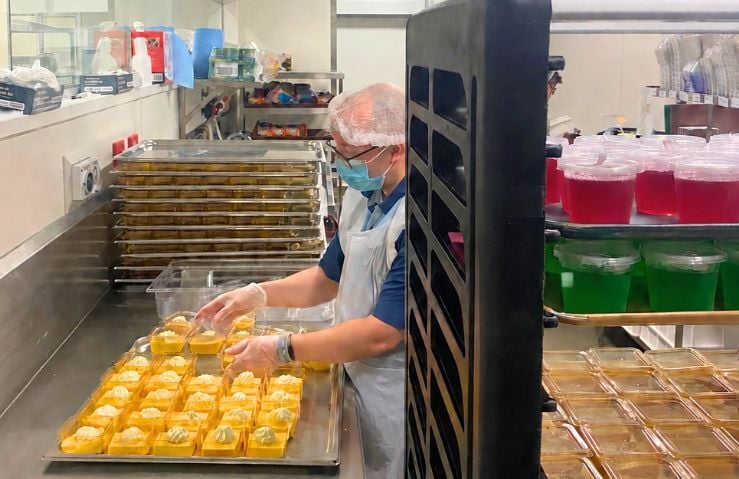
The team introduced certified compostable paper packaging and used recyclable recycled PET (rPET) containers and lids where compostable products could not meet operational needs. This gave each product a practical packaging and recovery pathway.
Supporting better waste recovery
The recovery system was designed alongside the packaging changes. Waste partners confirmed how materials would be collected and processed, giving teams a practical pathway for organics and recyclable items.
Staff education supported correct sorting and helped reduce contamination across the organics and recycling streams.
“Changing the packaging was only one part of the solution. We also needed to understand where each material would go after use and make it straightforward for our teams to sort it correctly. Working with our packaging and waste partners helped us turn that thinking into a practical system.” Brian Fossey, ISS Food Service Manager at Flinders Medical Centre
Improving organics recovery
After the rollout, collections of 12 120-litre organics bins increased from twice a week to three or four times a week. This reflects greater recovery of food waste and compostable packaging. Training, toolbox discussions, site audits and Sustainability Champions helped teams sort waste correctly and reduce contamination after the initial rollout.
Next steps
ISS is continuing to work with Pinnacle Packaging Australia to explore packaging for retherm meal services. New products will be assessed against operational requirements and available recovery pathways, with staff education continuing to support correct waste separation.
ISS is continuing to work with Pinnacle Packaging Australia to explore packaging for retherm meal services. New products will be assessed against operational requirements and available recovery pathways, with staff education continuing to support correct waste separation.